
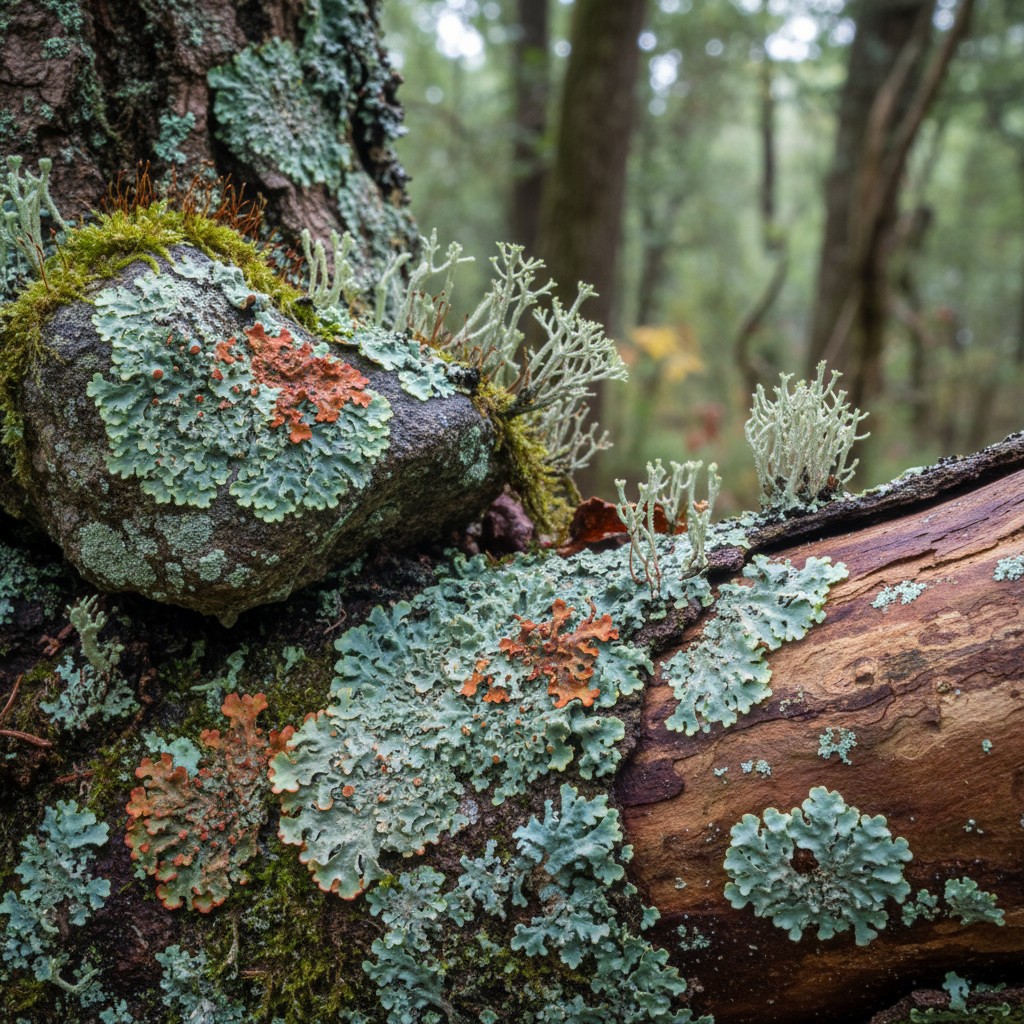
Lichens are remarkable life forms that often go unnoticed, quietly growing on rocks, trees, soil, and even man-made surfaces. They are not single organisms but living partnerships between a fungus and a photosynthetic partner, usually an alga or cyanobacterium, working together to survive in environments where few organisms can. From humid rainforests to exposed mountain tops and busy city streets, lichens play essential ecological roles, including nutrient cycling, soil formation, and serving as natural indicators of environmental change. Although they may look simple at first glance, lichens display an incredible diversity of forms and structures. To better understand and identify them, scientists commonly group lichens based on their overall shape and growth form, leading to the main types you’ll explore next.
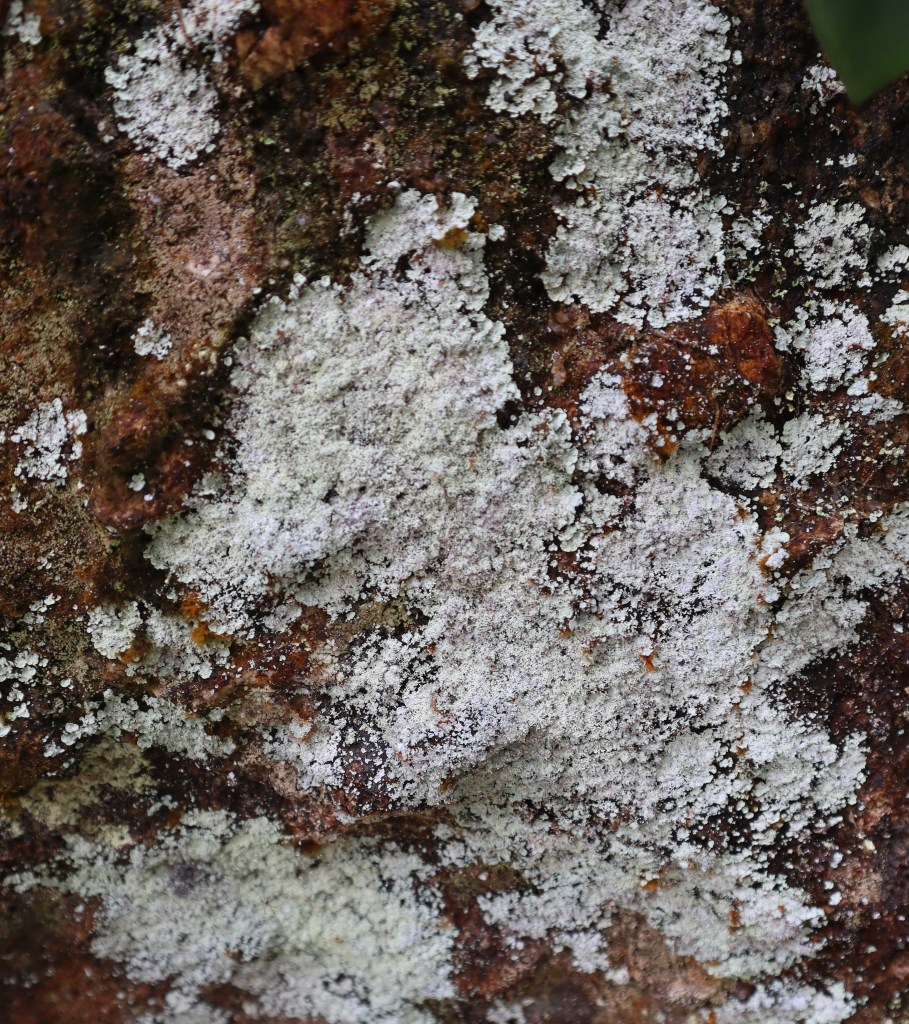
Crustose lichens are the quiet artists of the natural world—thin, paint-like organisms that cling tightly to rocks, tree bark, walls, and even old monuments, as if they’ve been brushed on by nature itself. Unlike leafy or bushy lichens, crustose lichens form flat, crusty patches that cannot be peeled away without damaging the surface beneath them, because they grow into it rather than just sitting on top. This intimate relationship makes them incredibly tough and slow-growing, allowing them to survive harsh environments such as exposed cliffs, polluted cities, and extreme climates. Despite their humble appearance, crustose lichens play an important ecological role: they are often among the first organisms to colonize bare surfaces, helping to break down rock and kick-start soil formation. If you look closely, their cracked patterns, subtle colours, and tiny fruiting bodies (sometimes, you need a magnifying glass to see them) reveal a hidden beauty, and a reminder that even the smallest, most overlooked organisms can be powerful pioneers.
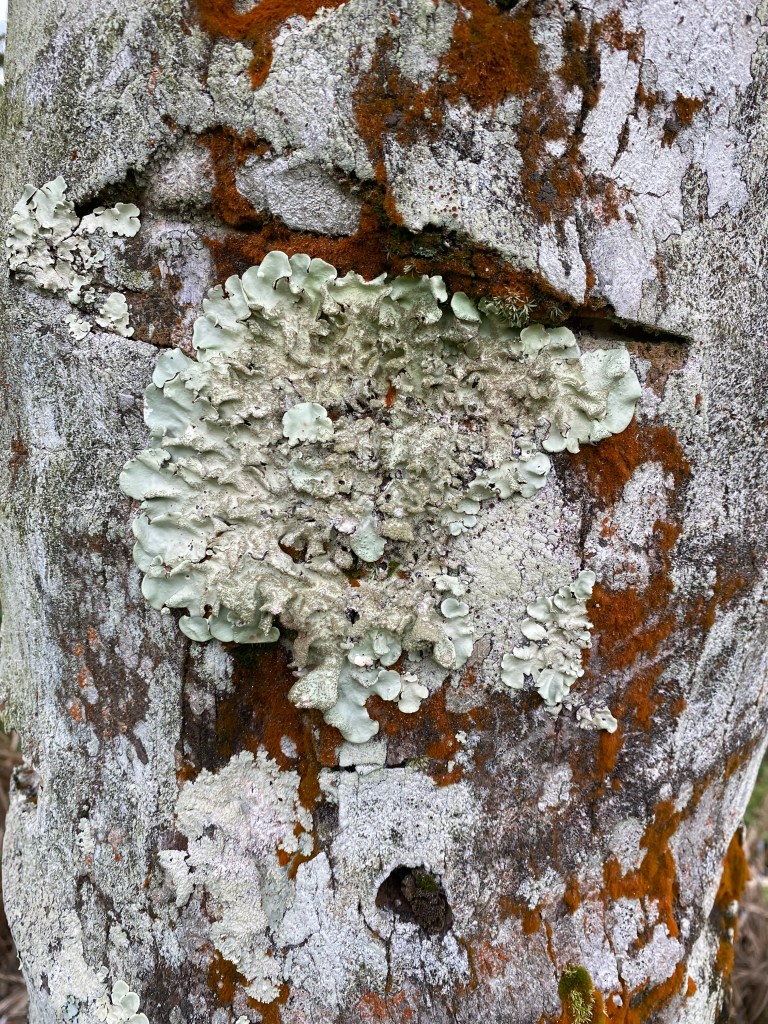
Foliose lichens are like nature’s living rosettes – leafy, layered organisms that gently spread across tree bark, rocks, and soil, looking a little like tiny green or grey lettuce leaves pressed against the surface. Unlike crustose lichens, foliose lichens are only loosely attached, usually anchored by small root-like structures, which means you can sometimes lift their edges and see the surface beneath. Their soft, flexible lobes allow them to capture light efficiently and exchange gases easily, making them especially sensitive to changes in air quality and moisture. Because of this, foliose lichens are widely used as natural bioindicators of environmental health, particularly air pollution. On a walk through a forest, their shapes and colours (ranging from pale green to bluish-grey or even brown) add texture and quiet beauty to tree trunks, quietly telling a story about the cleanliness of the air and the balance of the ecosystem around them.
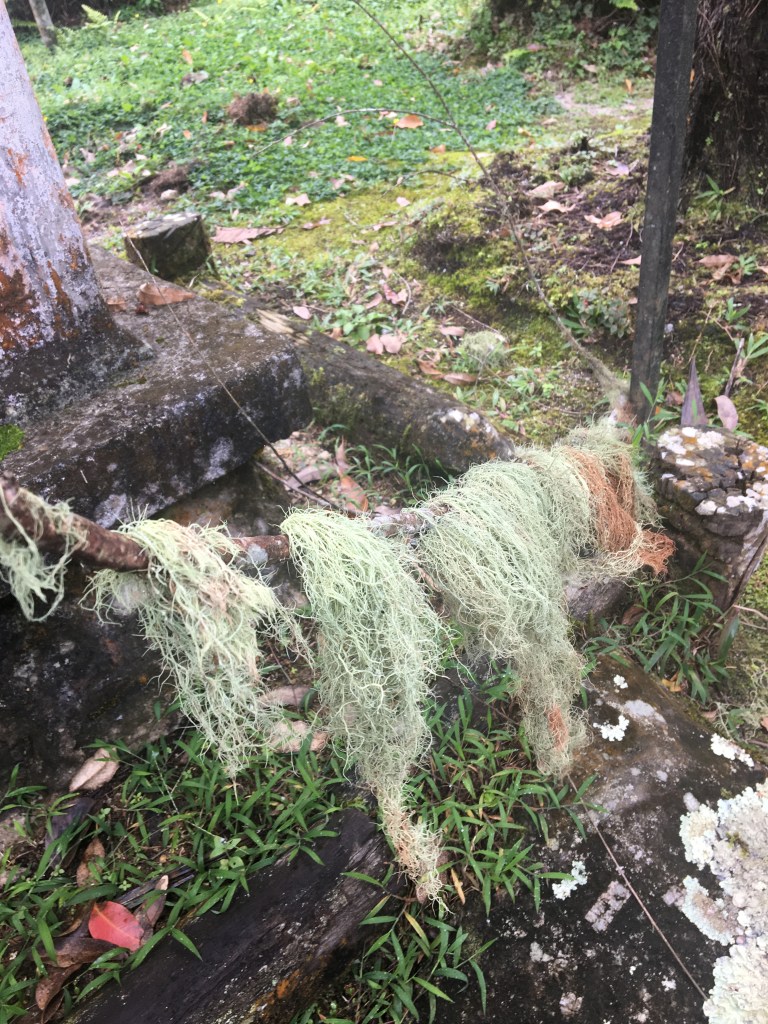
Fruticose lichens are the most eye-catching of all lichens, growing as tiny shrubs, wispy beards, or coral-like tufts that hang from tree branches, rocks, and even fences. Instead of lying flat, they stand upright or dangle freely, with rounded or ribbon-like branches that give them a three-dimensional, almost miniature-forest appearance. This growth form allows fruticose lichens to absorb moisture and nutrients directly from the air, making them especially sensitive to air quality and environmental change. Because they respond quickly to pollution and climate stress, their presence (or absence) can reveal a great deal about the health of an ecosystem. Whether draping gracefully from forest canopies or forming delicate clusters on exposed landscapes, fruticose lichens are both ecological sentinels and natural ornaments, reminding us that clean air supports life in even its most delicate forms.
 Lichens of Peninsular Malaysia
Leave a comment