
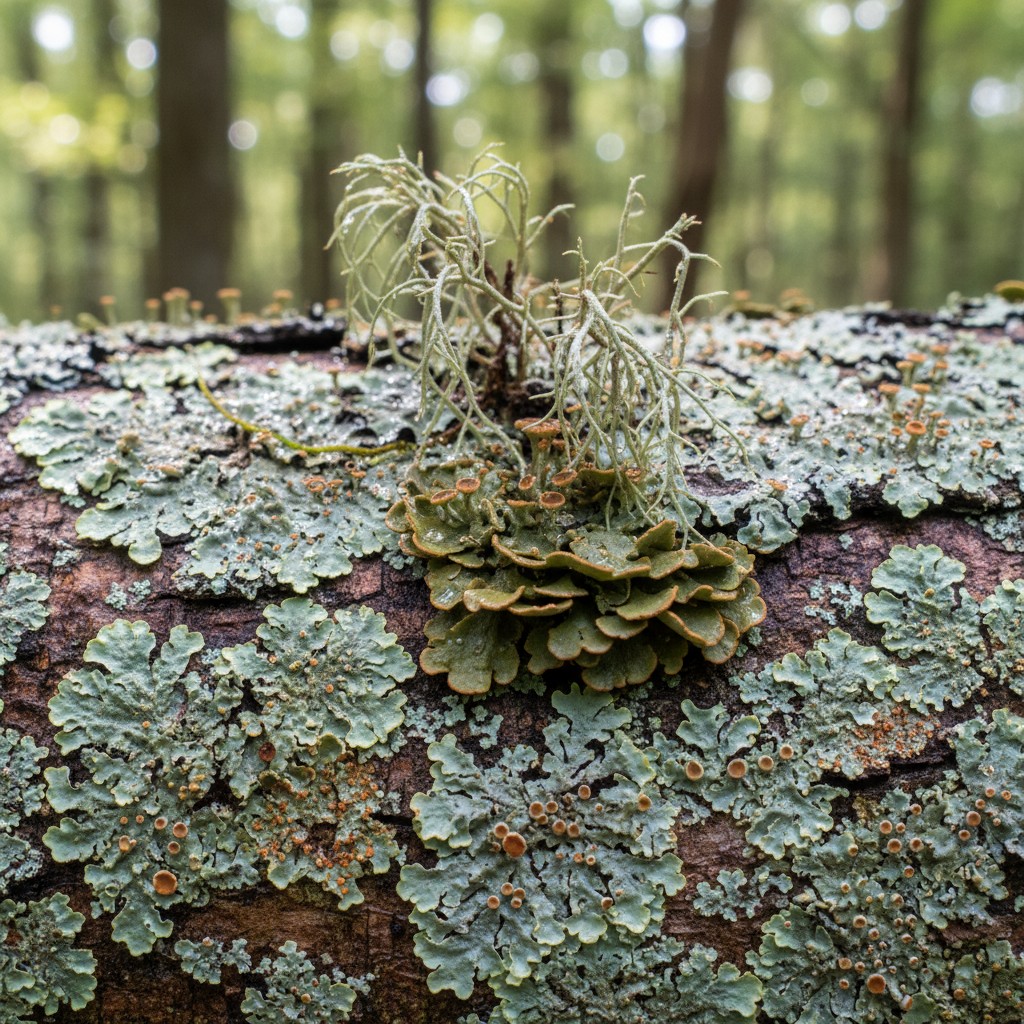
Bukit Larut provides an ideal environment for lichens, which are composite organisms formed by a symbiotic relationship between fungi and algae. Due to the high humidity and consistent rainfall on Maxwell Hill, these organisms flourish on tree trunks, branches, and rocks throughout the highland forest. Visitors can observe various forms, including leafy foliose lichens and hair-like fruticose varieties that hang from the canopy. Beyond their visual interest, these lichens act as vital bio-indicators; their sensitivity to atmospheric toxins means their presence is a reliable sign of the exceptionally high air quality found at this altitude.
Here are some of the identified lichens found in Bukit Larut.
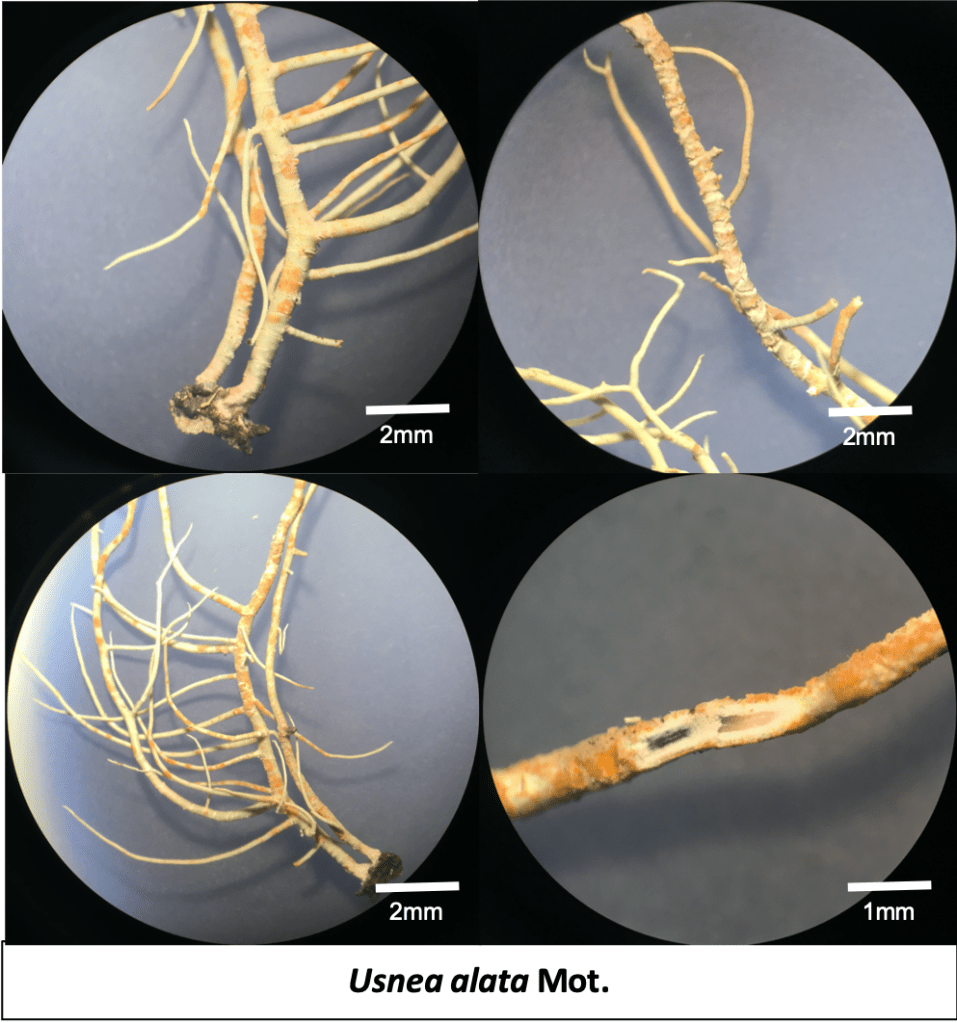
Usnea alata is a remarkable and rare find among the lichens of Bukit Larut, distinguished by its unique “winged” or angular branch structure. Unlike the cylindrical branches typical of most beard lichens, this species features stems that are noticeably flattened or tri-edged, creating thin ridges or “wings” that run along the length of the thallus. This structural adaptation provides a larger surface area to capture moisture from the mountain mists. Its growth habit is primarily pendent, with long, drooping grey-green strands that can give it a shaggy, architectural appearance. The surface is often sparsely covered in small, point-like soralia, and its internal medulla is typically quite dense. Because of its specialized shape and sensitivity to environmental shifts, Usnea alata is a high-value indicator of the ancient, undisturbed cloud forest conditions preserved at the higher elevations of Maxwell Hill.
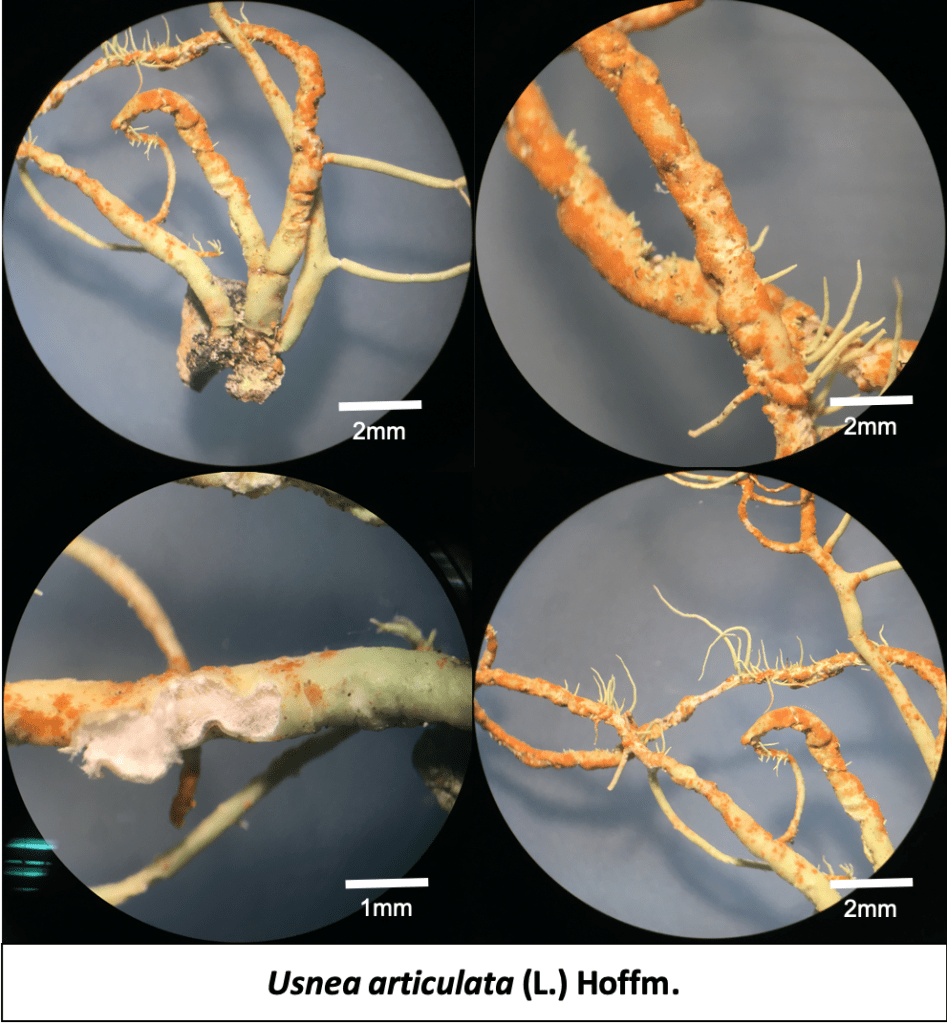
Usnea articulata isOne notable species found in the humid canopies of Bukit Larut is Usnea articulata, commonly known as the “string-of-sausage” lichen. This pale, grey-green lichen is easily identified by its unique structure: its long, hanging branches are divided into swollen, inflated segments that resemble a miniature string of sausages. Growing up to a meter in length, it thrives in the mist-heavy environment of the hill, where it often drapes over branches without being firmly attached. Because it relies entirely on the atmosphere for nutrients and is highly sensitive to sulfur dioxide, the presence of Usnea articulata is a reliable indicator of the pristine, unpolluted air quality found at this altitude.
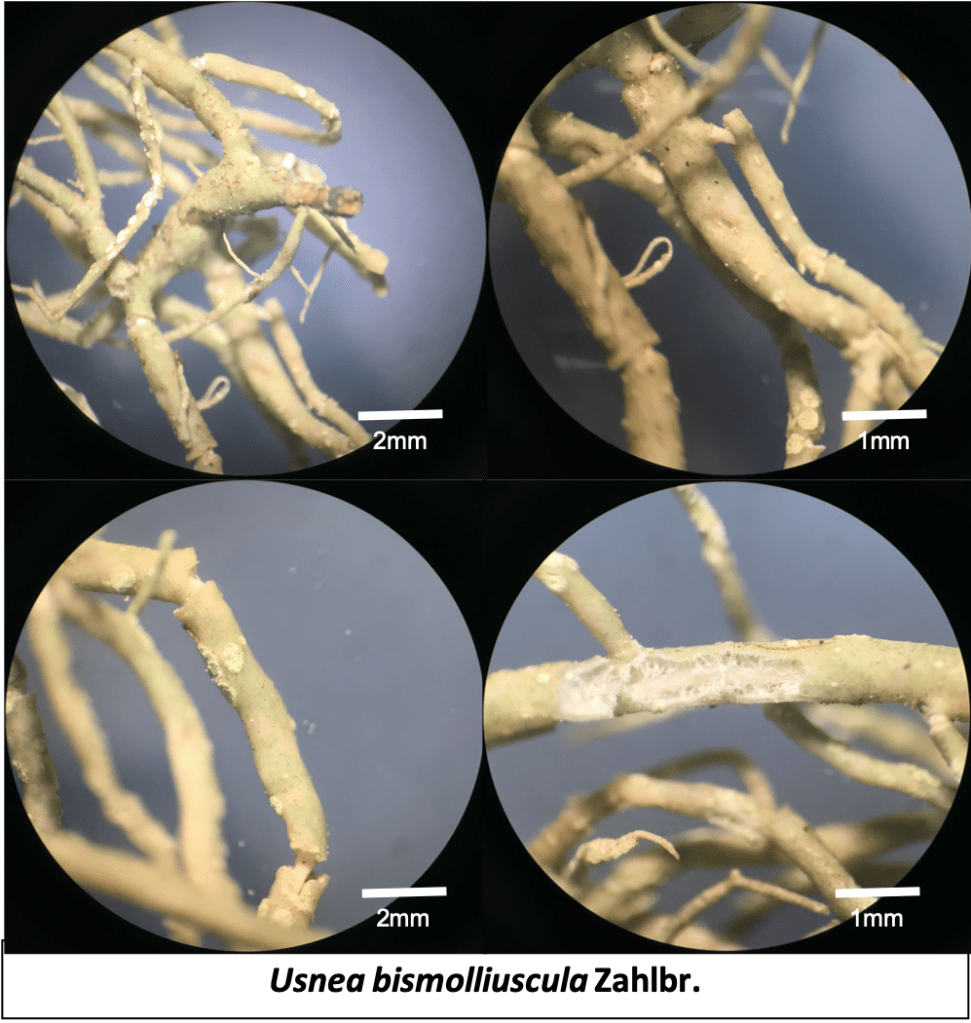
Usnea bismolliuscula is a shrub-like fruticose lichen that adds a distinct texture to the branches of pine trees and other highland vegetation in Bukit Larut. This pale yellow-green species is characterized by its subpendulous to erect thallus, which typically reaches lengths of 8–12 cm and features intricate, irregular branching. A key diagnostic feature of this lichen is the presence of numerous pseudocyphellae—tiny, pale holes or breaks in the outer cortex that allow for gas exchange with the internal medulla. These minute openings, often found most abundantly on the smaller secondary branches and apices, give the lichen a perforated appearance under close inspection. Like many of its relatives in the Usnea genus, U. bismolliuscula is rich in usnic acid, which provides it with natural antimicrobial properties and serves as an indicator of the exceptionally clean, mist-rich air of the Malaysian highlands.
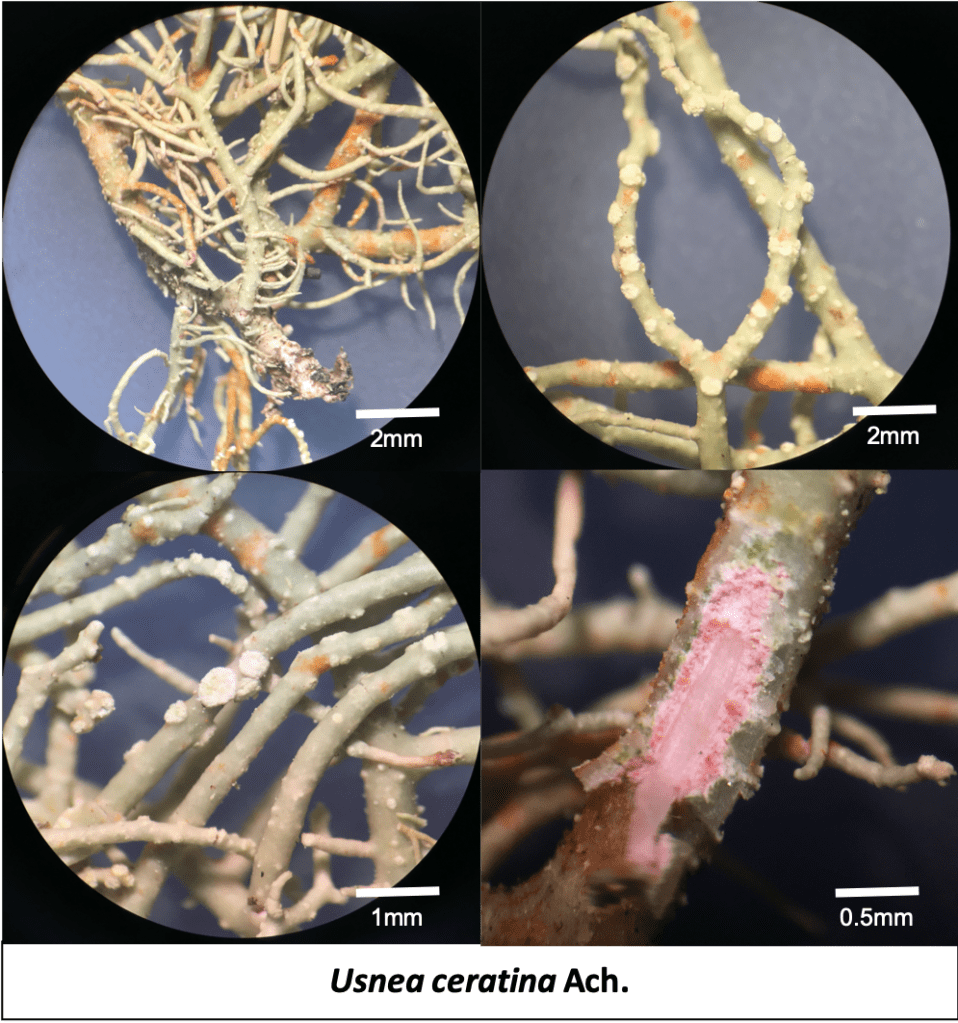
Usnea ceratina, frequently referred to as the “warty beard lichen,” is a pendulous species that adds a rugged, textured appearance to the mist-soaked branches of Bukit Larut. Unlike its smoother relatives, this lichen is easily recognized by its coarse, gritty thallus, which is heavily covered in small, pimple-like bumps called tubercles. These warts often burst to form granular soralia, giving the grey-green branches a roughened, “shaggy” feel to the touch. One of its most distinctive internal features is a pale pinkish medulla (the inner layer) and a similarly colored central cord, which can be seen if the branch is gently snapped. Highly adapted to humid, high-altitude cloud forests, Usnea ceratina is a sensitive bio-indicator; its flourishing presence on the hill is a testament to the clean air and low sulfur dioxide levels of the surrounding environment.
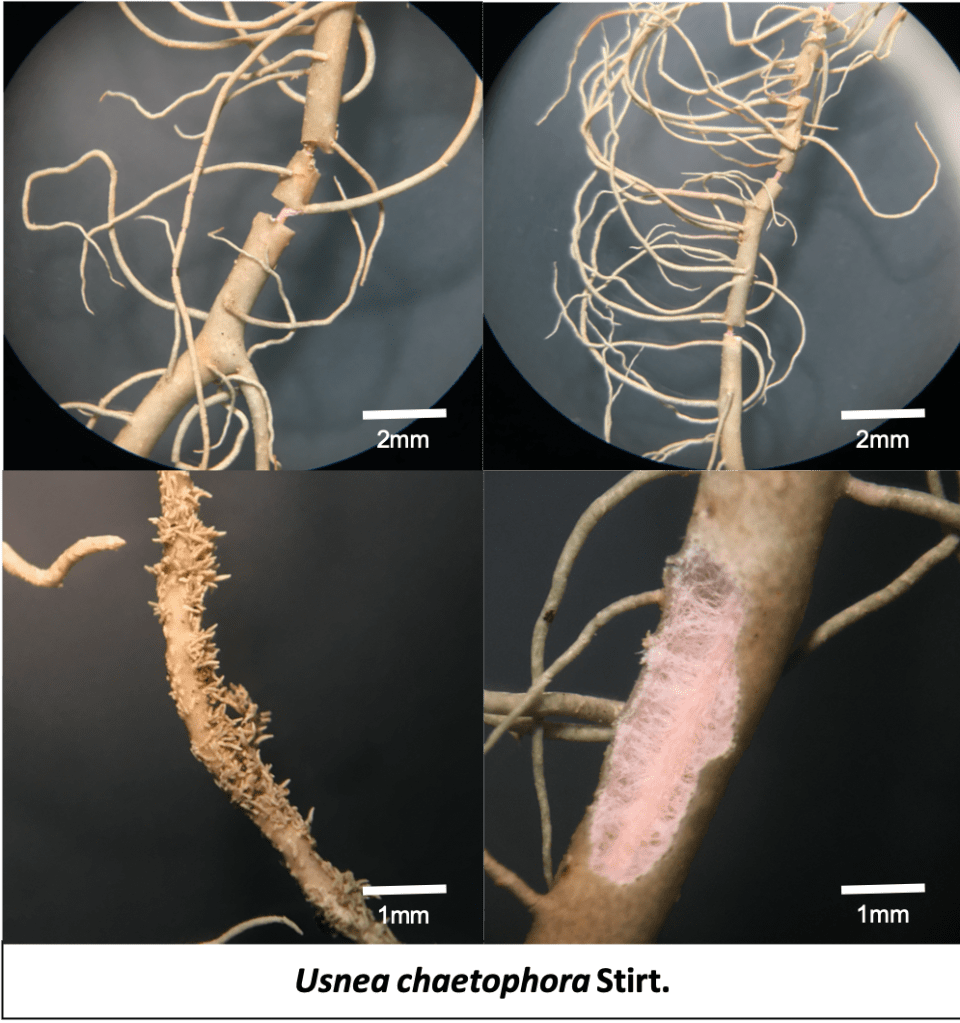
Usnea chaetophora is a pendulous, thread-like lichen that is often found swaying from the branches of conifers and hardwoods in high-humidity areas like Bukit Larut. It is primarily identified by its slender, grey-green branches that are frequently divided by regular, circular cracks known as annular cracks, which reveal the white, elastic central cord inside. Unlike many other species in the Usnea genus, U. chaetophora typically lacks a dense covering of small “hairs” or “warts” (fibrils and papillae), giving it a smoother, more streamlined appearance. It relies on its dense internal medulla to store moisture from the mountain mists, and its presence is a strong biological signal of an environment free from sulfur dioxide pollution.
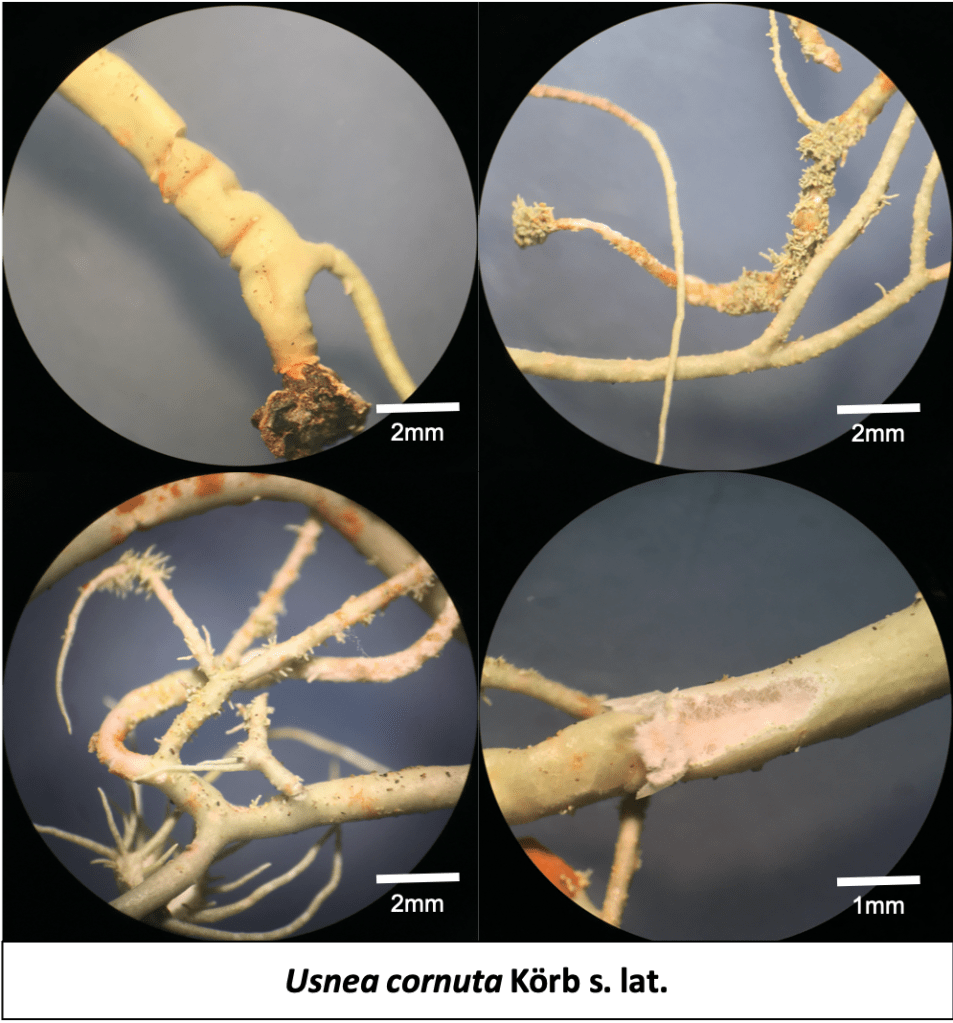
Usnea cornuta, often referred to as the “inflated beard lichen,” is a common sight in the moist, montane forests of Bukit Larut. This species is easily distinguished by its shrubby, tufted growth habit and its markedly inflated main branches, which taper sharply toward the tips. A key diagnostic feature is the way its side branches join the main stem: they are noticeably “pinched” or constricted at the attachment point, often accompanied by a small white ring. Its pale grey-green thallus is frequently dotted with tiny white spots that develop into soredia (powdery reproductive granules) or isidia (finger-like outgrowths), giving the surface a speckled appearance. Unlike some other Usnea species, its base is generally pale rather than blackened, and its presence serves as a clear indicator of the high humidity and exceptionally clean air found on the hill.
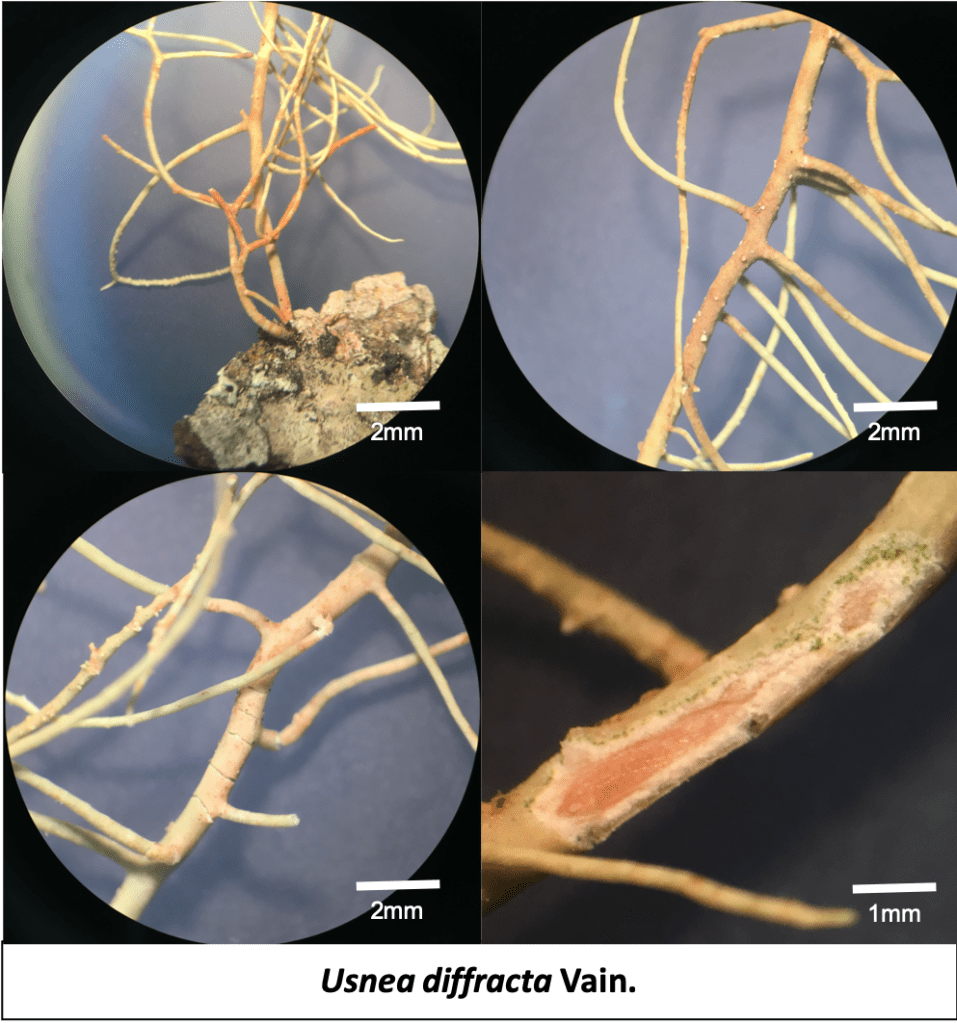
Usnea diffracta, popularly known as the “long-filament beard lichen,” is a distinctive pendent species that hangs in elegant, thread-like streamers from the branches of Bukit Larut’s mountain trees. This lichen is primarily recognized by its smooth, glossy branches that lack the small hairs (fibrils) or powdery spots (soralia) common in other species, giving it a clean, streamlined look. A defining characteristic is the presence of annular pseudocyphellae—ring-like white cracks that encircle the branches at regular intervals, acting as minute “breathing holes” for gas exchange. Inside, it features a remarkably dense and solid central cord, which provides the structural strength needed to support its long, draping thallus. Beyond its aesthetic appeal, Usnea diffracta is highly valued in traditional medicine for its rich concentration of diffractaic acid, and its flourishing presence on the hill is a reliable indicator of a pristine, undisturbed atmosphere.
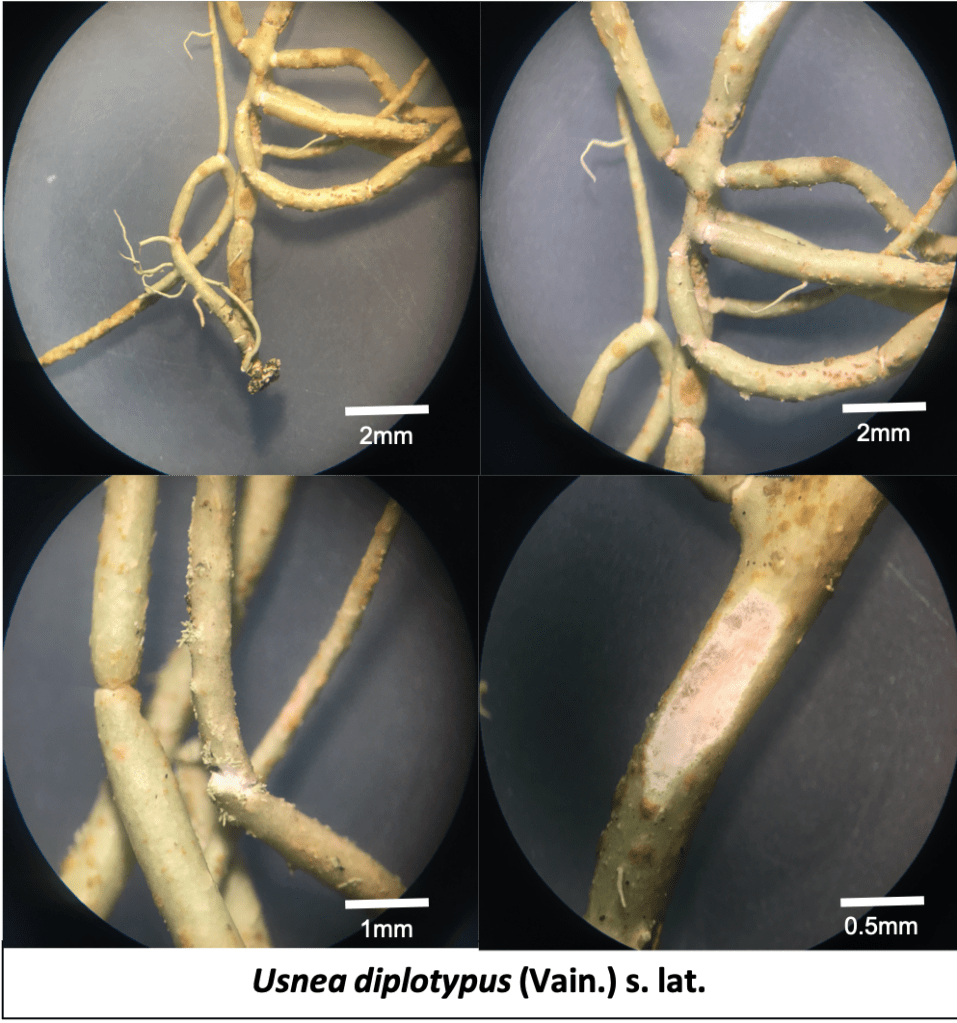
Usnea diplotypus is a shrubby, tufted lichen that often takes on a slightly drooping or subpendent appearance as it matures on the tree barks of Bukit Larut. It is characterized by its uneven, irregularly swollen branches that frequently display small depressions and twisted tips, giving it a somewhat distorted silhouette. A key identifying feature is the presence of numerous isidiomorphs—slender, finger-like reproductive outgrowths—that are relatively long compared to similar species. Its pale yellow-green thallus typically has a thin outer cortex and a medulla of variable density, which reacts K+ yellow to red in chemical tests, signaling the presence of salazinic acid. This hardy species is particularly well-adapted to well-lit, moist sites, and its occurrence at higher elevations confirms the presence of the clean, oxygen-rich environment characteristic of Maxwell Hill.
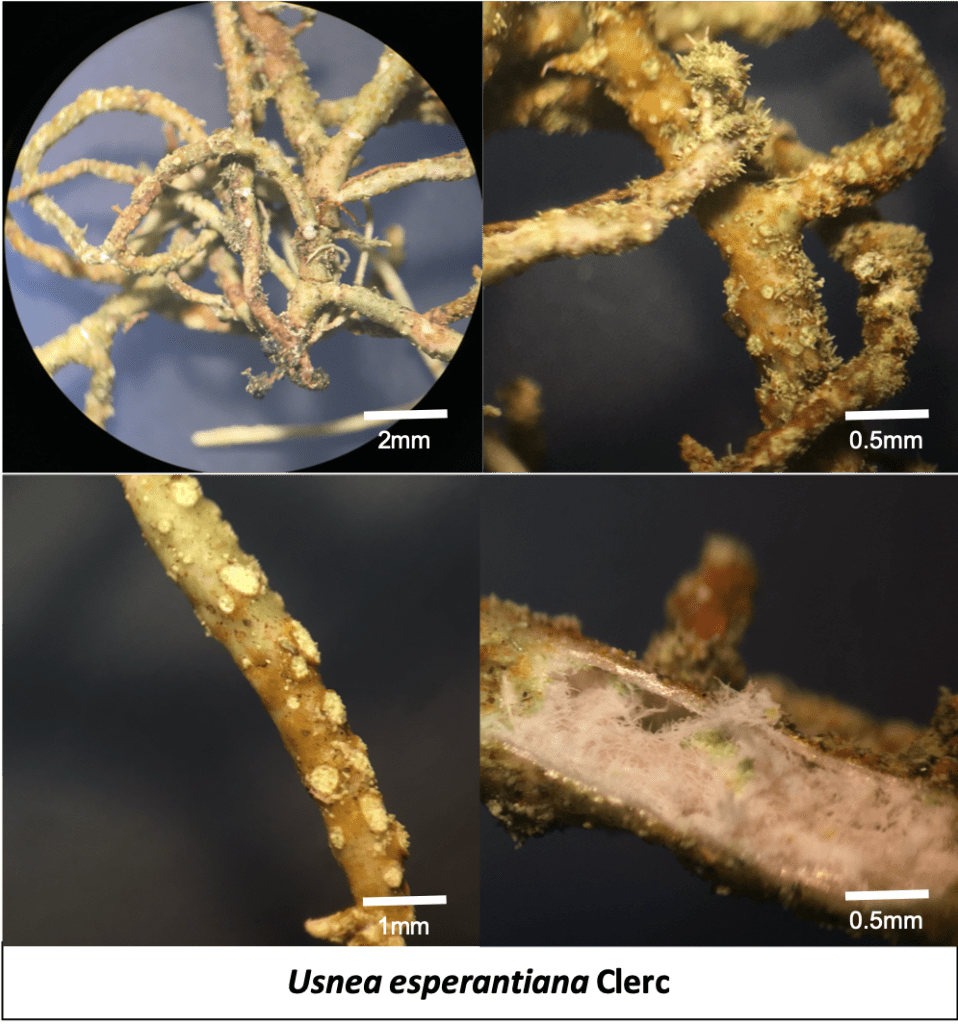
Usnea esperantiana is a relatively small, shrubby lichen that forms dense, erect tufts on twigs and branches within the moist highland forests of Bukit Larut. Typically growing only 4–6 cm in length, this species is distinguished by its pale grey-green, twisted branches that often end in characteristic hooked or recurved tips. A defining feature for identification is the presence of numerous white, rounded patches called soralia, which are often larger than the diameter of the branch itself and produce granular soredia for reproduction. Unlike some larger Usnea species, its base remains unblackened or matches the color of the rest of the thallus. Inside, it features a white, dense medulla that reacts K+ yellow to red in chemical tests, signaling the presence of salazinic acid—a chemical signature common among the clean-air-loving lichens of Malaysia’s montane regions.
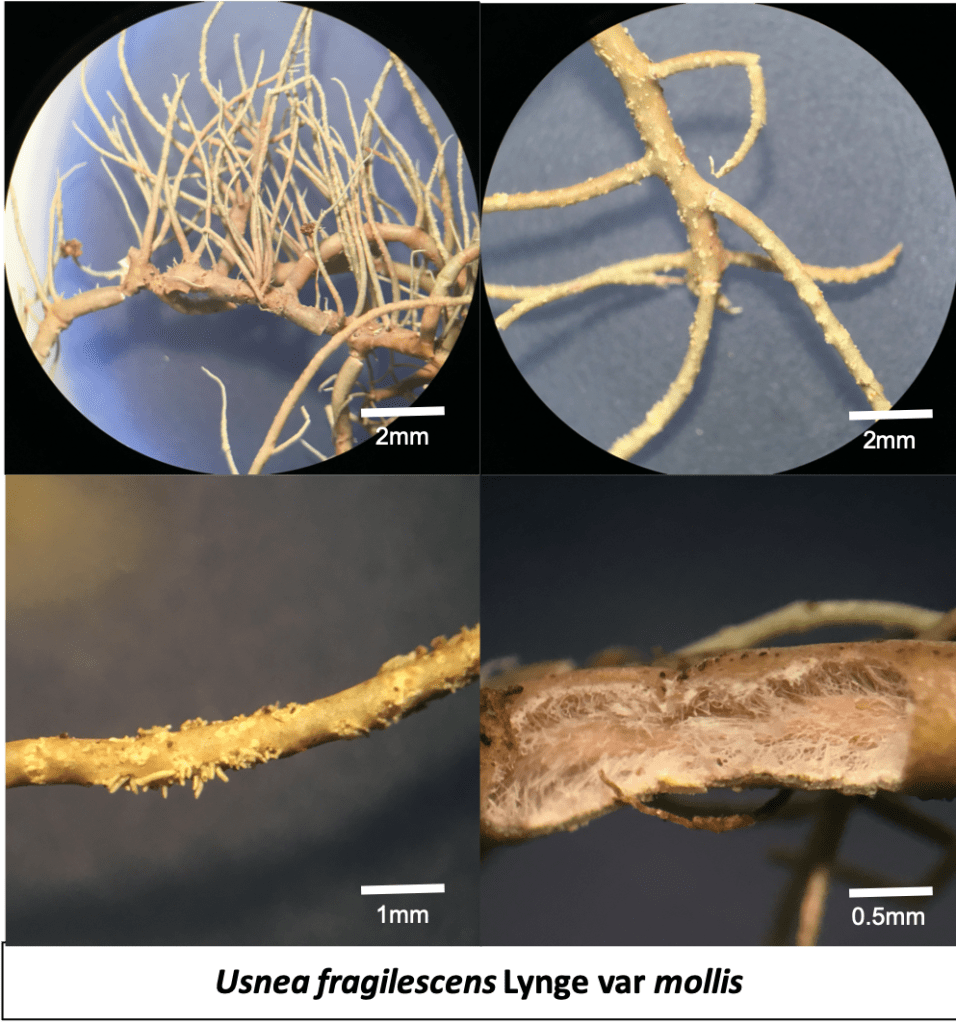
Usnea fragilescens is a distinctive shrubby lichen that thrives in the moisture-rich canopies of Bukit Larut. True to its name, this species is characterized by its relatively fragile and brittle nature, often featuring branches that appear slightly inflated or “puffy” rather than solid. A defining visual trait is its markedly blackened base, where the lichen attaches to the substrate, which contrasts sharply with the pale, yellowish-green color of the rest of the thallus. Its surface is frequently covered in numerous small, finger-like isidia and rounded soralia, giving it a textured, almost fuzzy appearance under close inspection. Because it prefers high-humidity environments with high light exposure, it is most commonly found on the outer branches of trees near the summit, where it relies on the mountain mist to sustain its delicate structure.
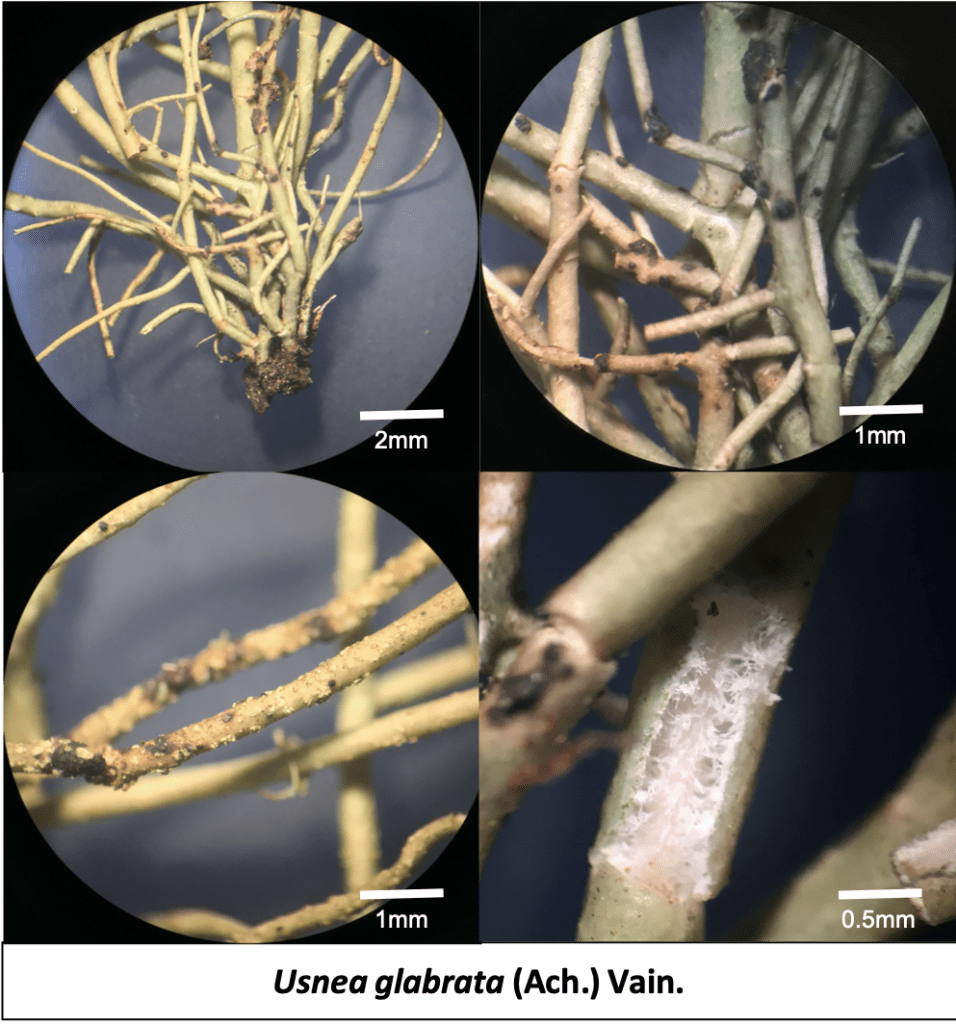
Usnea glabrata, often called the “bald beard lichen,” is a small, shrubby species that forms compact, tufted colonies on the twigs and small branches of trees in Bukit Larut. True to its name, this lichen has a relatively “bald” or smooth appearance, lacking the dense hair-like fibrils found in many of its relatives. It is most easily identified by its inflated (swollen) terminal branches that often end in large, distinctive patches of soralia. These reproductive spots are unique because they appear at the very tips of the branches, often becoming wider than the branch itself and appearing “capitate” or head-like. Its pale yellowish-green thallus usually features a pale, unblackened base, and its presence is a definitive sign of the high humidity and exceptionally clean, mist-filtered air found near the summit of Maxwell Hill.
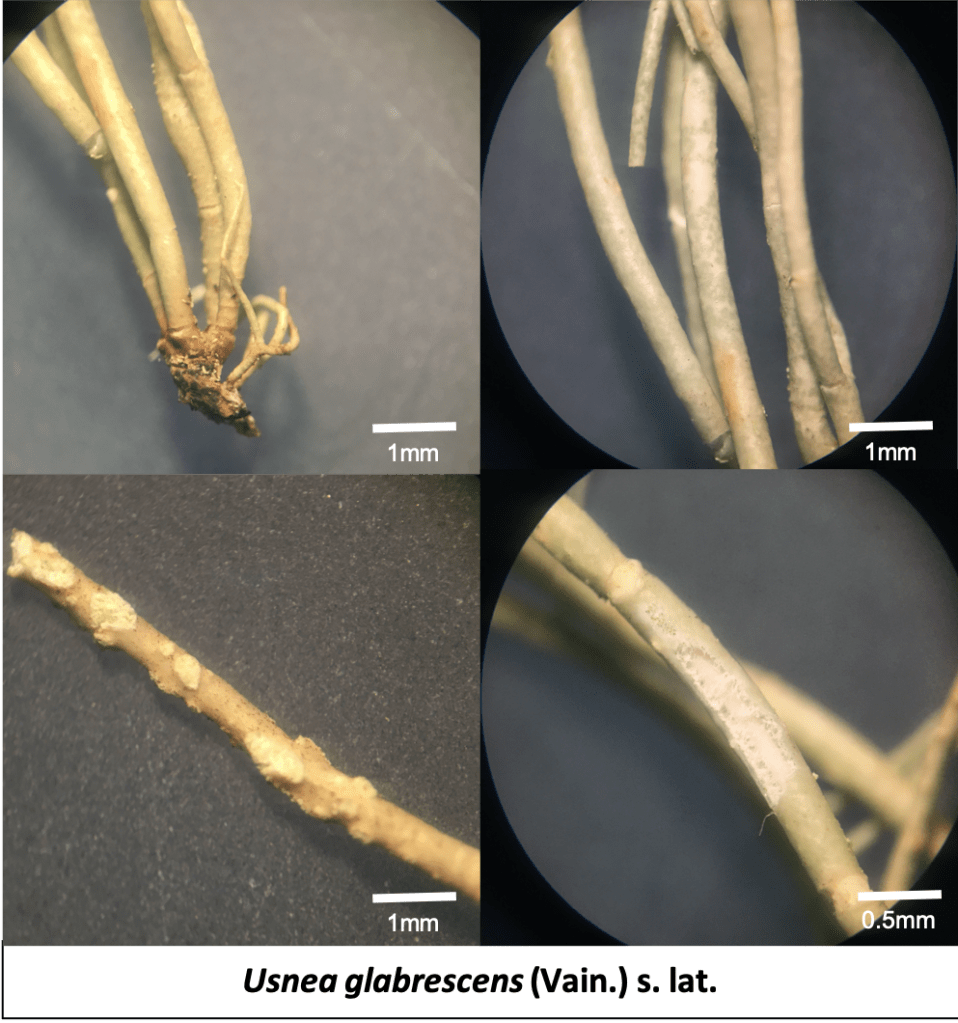
Usnea glabrescens is a small to medium-sized shrubby lichen that typically forms dense, semi-pendent tufts on the bark of trees in the mist-exposed zones of Bukit Larut. This species is characterized by its relatively smooth main branches that transition into a more complex network of finer segments towards the tips. A key diagnostic feature is the presence of punctiform soralia—small, well-defined circular spots—that are primarily located on the upper parts of the thallus. These spots often develop into slightly raised structures that produce fine, powdery granules for reproduction. While it shares some visual similarities with other shrubby varieties, Usnea glabrescens is distinguished by its pale base and a relatively thick, white central cord that provides it with the resilience to withstand the frequent mountain winds. Its presence is a strong indicator of a stable forest ecosystem with consistently high air quality.
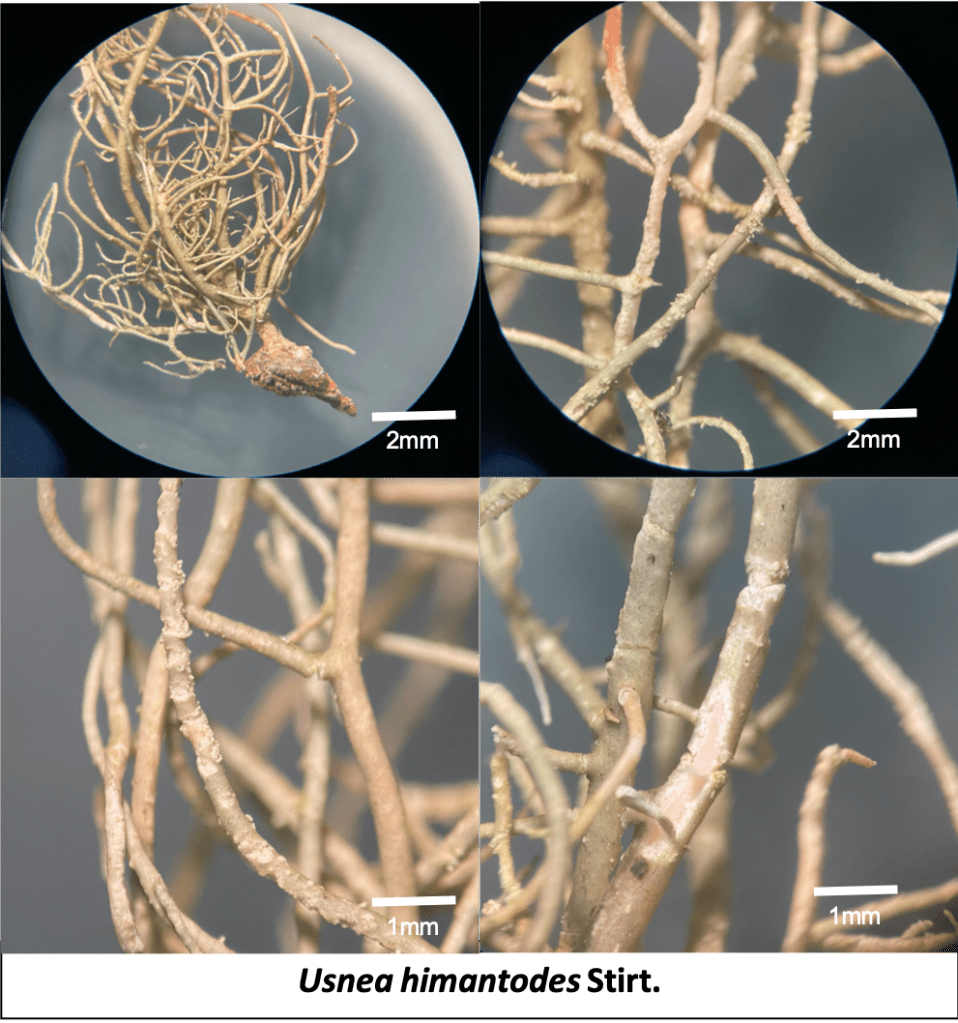
Usnea himantodes is a striking, pendent lichen that drapes in long, elegant curtains from the tree canopies of Bukit Larut. This species is primarily identified by its flaccid, ribbon-like appearance, with main branches that are often slightly flattened rather than perfectly cylindrical. A defining feature is its surface texture; the thallus is typically covered in numerous papillae (small bumps) and fibrils (short, hair-like side branches), giving it a shaggy, “hairy” look as it sways in the mountain breeze. Unlike many other hanging species, Usnea himantodes is known for its tough, elastic central cord and a medulla that reacts K+ yellow turning red, signaling a high concentration of salazinic acid. Because it grows high in the canopy to maximize its exposure to fog and sunlight, its presence is a testament to the undisturbed, moisture-rich “cloud forest” environment found at the higher reaches of Maxwell Hill.
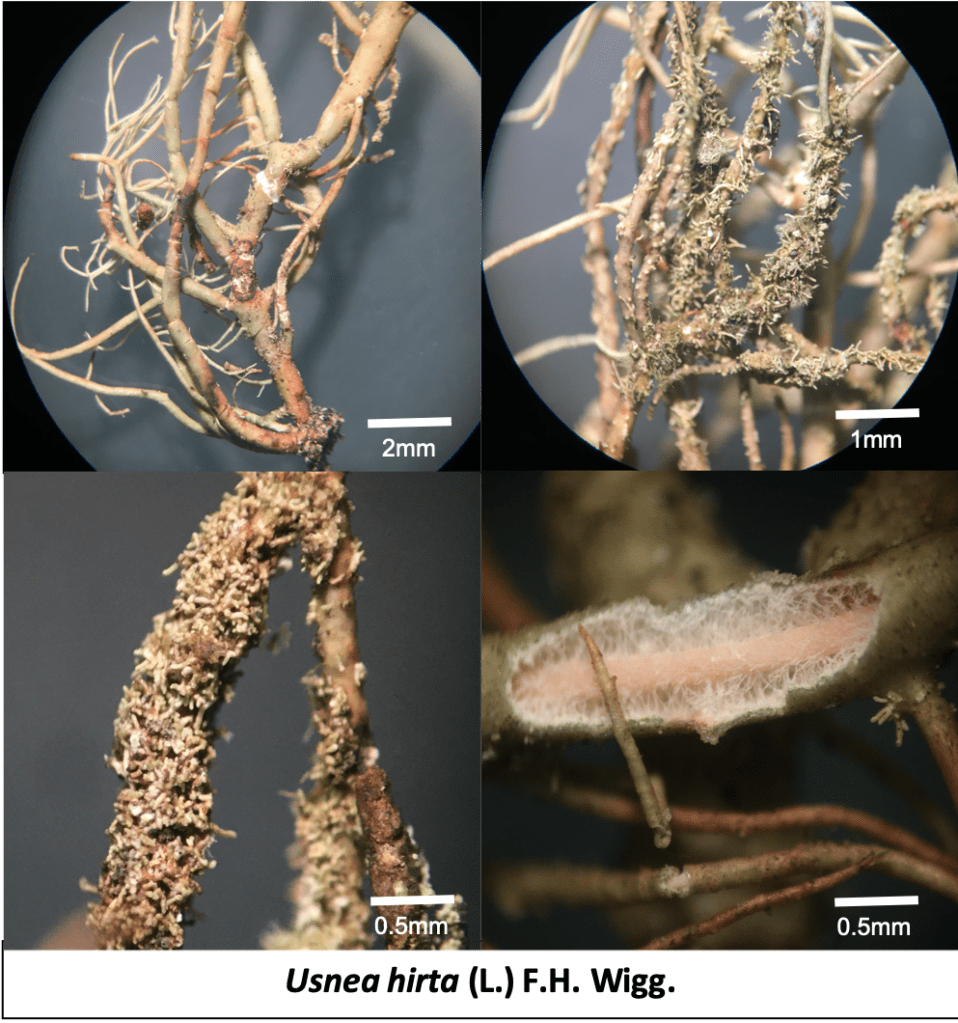
Usnea hirta, commonly known as the bristly beard lichen, is a small, bushy species that stands out in the Bukit Larut landscape due to its densely branched and “untidy” appearance. Growing in compact, upright tufts typically only 2–5 cm tall, it is heavily covered in isidiomorphs and short, hair-like fibrils that give it a distinctly bristly or “hairy” texture. Unlike many other Usnea species that produce distinct, circular patches of soredia, U. hirta tends to develop a more diffuse, granular surface as its outer cortex breaks down. It is often found on the bark of conifers or wooden railings near the summit, where it thrives in high-light environments. Notably, this species is somewhat more resistant to urban sulfur dioxide than its longer, hanging relatives, yet it still serves as a vital indicator of the healthy, moisture-rich ecosystem maintained within the highlands.
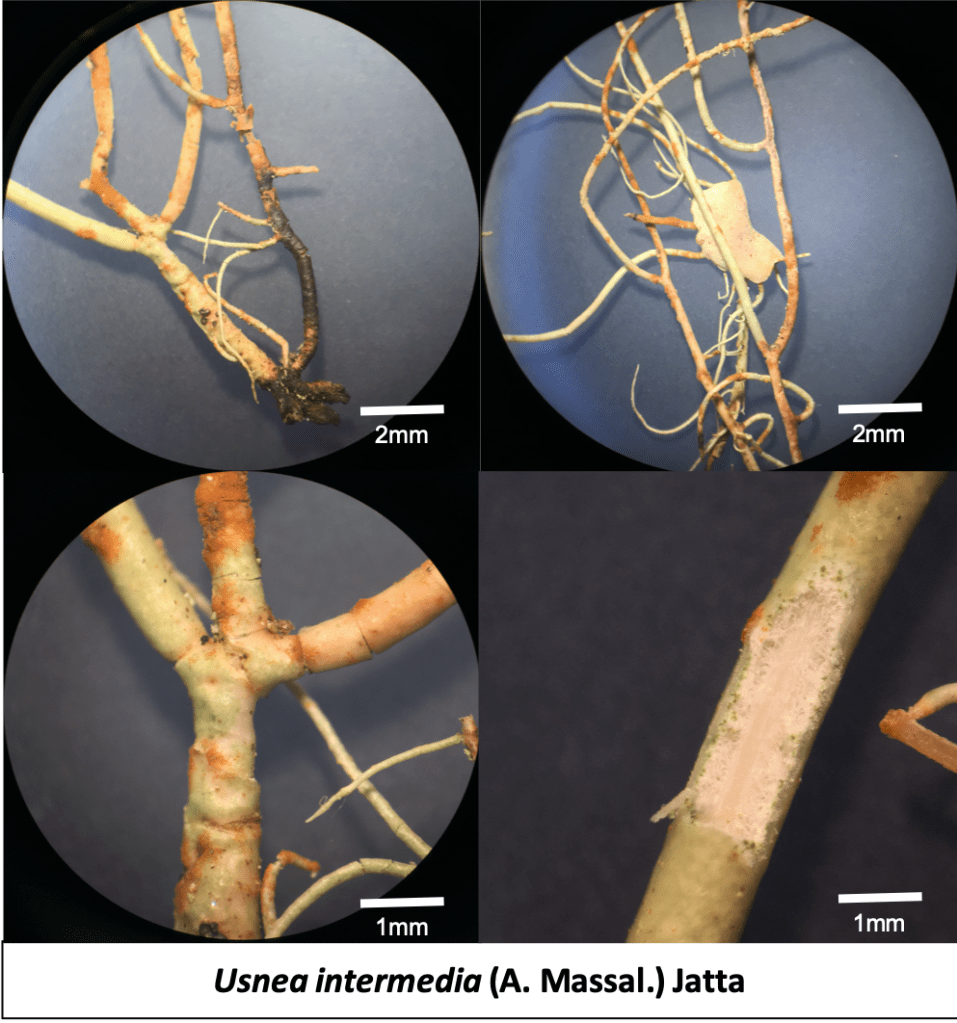
Usnea intermedia is a robust, shrubby lichen that often develops a subpendent habit as it matures in the high-humidity environment of Bukit Larut. This species is characterized by its relatively thick main branches and a dense, somewhat rigid branching pattern that gives it a sturdy appearance compared to more delicate varieties. A key diagnostic feature is its surface texture, which is heavily populated with papillae (small, rounded bumps) and soralia that frequently merge to form larger, irregular patches of powdery soredia. Its thallus is typically a vibrant yellowish-green, and the base where it attaches to the tree is usually pale rather than blackened. Internally, Usnea intermedia features a strong, white central cord and a medulla that reacts K+ yellow turning red, a chemical sign of salazinic acid that confirms its role as a bio-indicator of the pristine air quality found on Maxwell Hill.
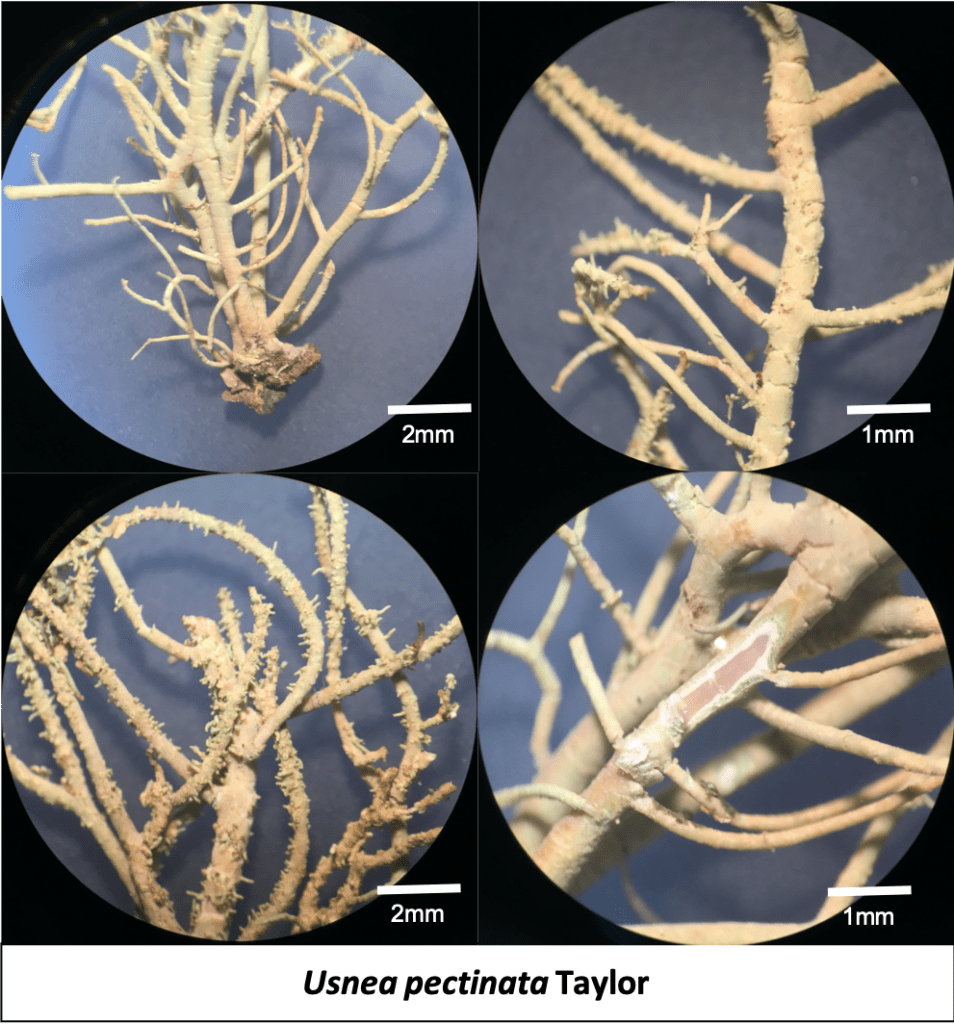
Usnea pectinata is a strikingly elegant, pendent lichen that is easily identified by its unique “comb-like” structure, which drapes from the branches of trees in the mist-shrouded heights of Bukit Larut. This species is characterized by long, slender main stems that support a series of short, parallel side branches (fibrils) of relatively equal length, arranged in a way that resembles the teeth of a comb. Its thallus is typically pale grey-green and possesses a smooth surface, largely lacking the warts or powdery patches found in more textured species. One of its most reliable internal features is a very thin medulla and a thick, central elastic cord, which allows the lichen to stretch without breaking during the heavy winds and rains frequent on Maxwell Hill. As a highly specialized “cloud forest” inhabitant, its presence is a clear signal of an environment with consistently high humidity and exceptional air purity.
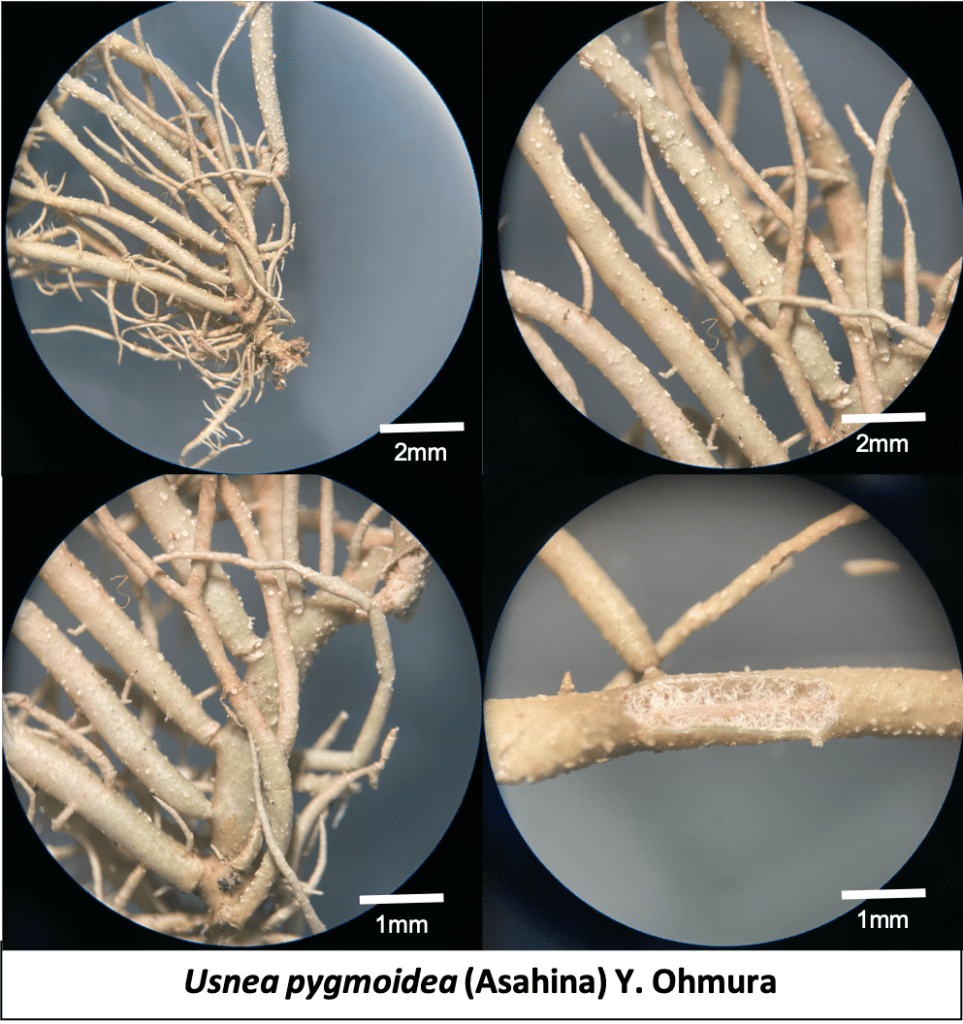
Usnea pygmoidea is a small, bushy lichen that forms compact and relatively rigid tufts on the sun-exposed branches of Bukit Larut. As its name suggests, it is one of the more diminutive members of the genus, typically characterized by a shrubby growth habit and very short, stout branches. This species is easily recognized by its extremely dense covering of isidia—tiny, finger-like reproductive structures—which can become so thick that they obscure the underlying surface of the pale green thallus. A key diagnostic feature is its sturdy, unblackened base and main branches that are often covered in small, rounded bumps (papillae). Because it favors high-light environments with frequent mist, it is commonly found on the topmost twigs of montane shrubs, where its presence serves as a clear indicator of high atmospheric purity and consistent humidity.
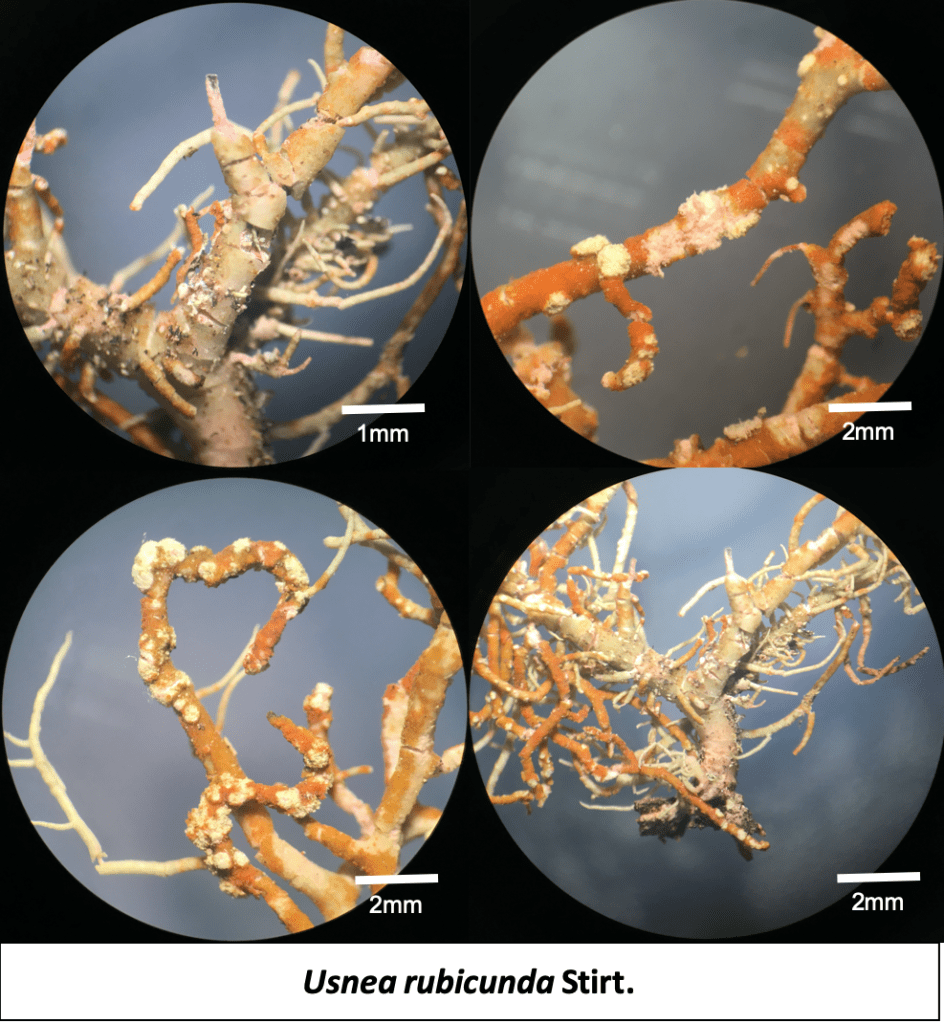
Usnea rubicunda, frequently called the “red beard lichen,” is one of the most visually striking species found in the montane forests of Bukit Larut. Unlike the typical pale green varieties, this lichen is easily identified by its distinct reddish to rusty-orange tint, which is caused by a concentration of pigments in its outer cortex. This shrubby to subpendent organism features a rugged thallus covered in numerous papillae and small, finger-like isidia, giving it a coarse and textured appearance. When the outer layer is scratched or broken, it reveals a contrasting white medulla inside. Because it thrives in high-light, high-humidity environments, it is often seen clinging to the sunny upper branches of trees. Its vibrant coloration and presence serve as a clear biological indicator of the unpolluted, oxygen-rich atmosphere that defines the Maxwell Hill summit.
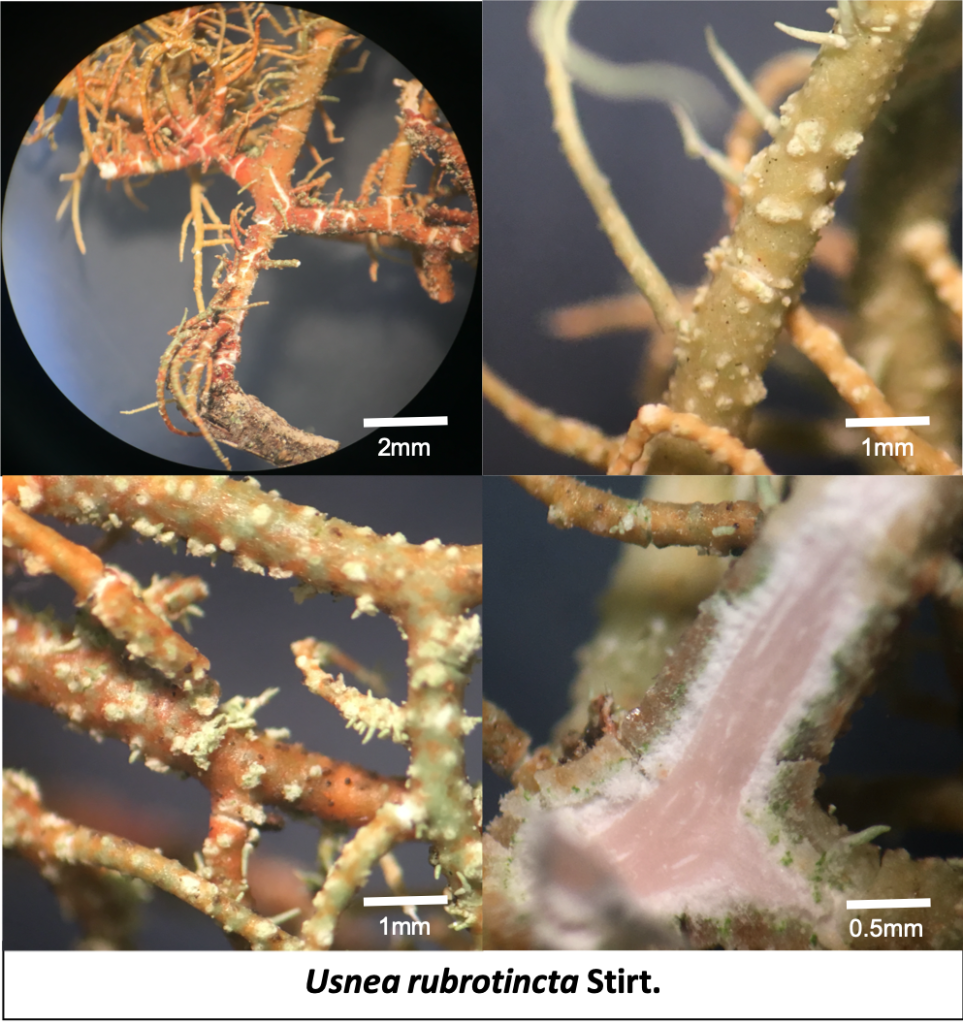
Usnea rubrotincta is a stunning shrubby lichen that adds a splash of color to the trees of Bukit Larut, often confused with Usnea rubicunda due to its reddish appearance. However, this species is distinguished by its more intense, blood-red to deep crimson pigmentation, which typically appears in patches or streaks rather than a uniform rusty tint. The thallus is relatively stiff and erect, featuring branches that are covered in tiny, spine-like isidia and small bumps. A key diagnostic secret lies just beneath the surface: unlike other red species, the red pigment in Usnea rubrotincta often penetrates into the outer medulla, meaning if you gently scrape the “bark” of the lichen, you will see a reddish layer rather than pure white. Thriving in the sun-drenched, misty canopy, its vibrant hue acts as a natural sunscreen, and its abundance is a sure sign of the pristine, high-altitude air quality on the hill.
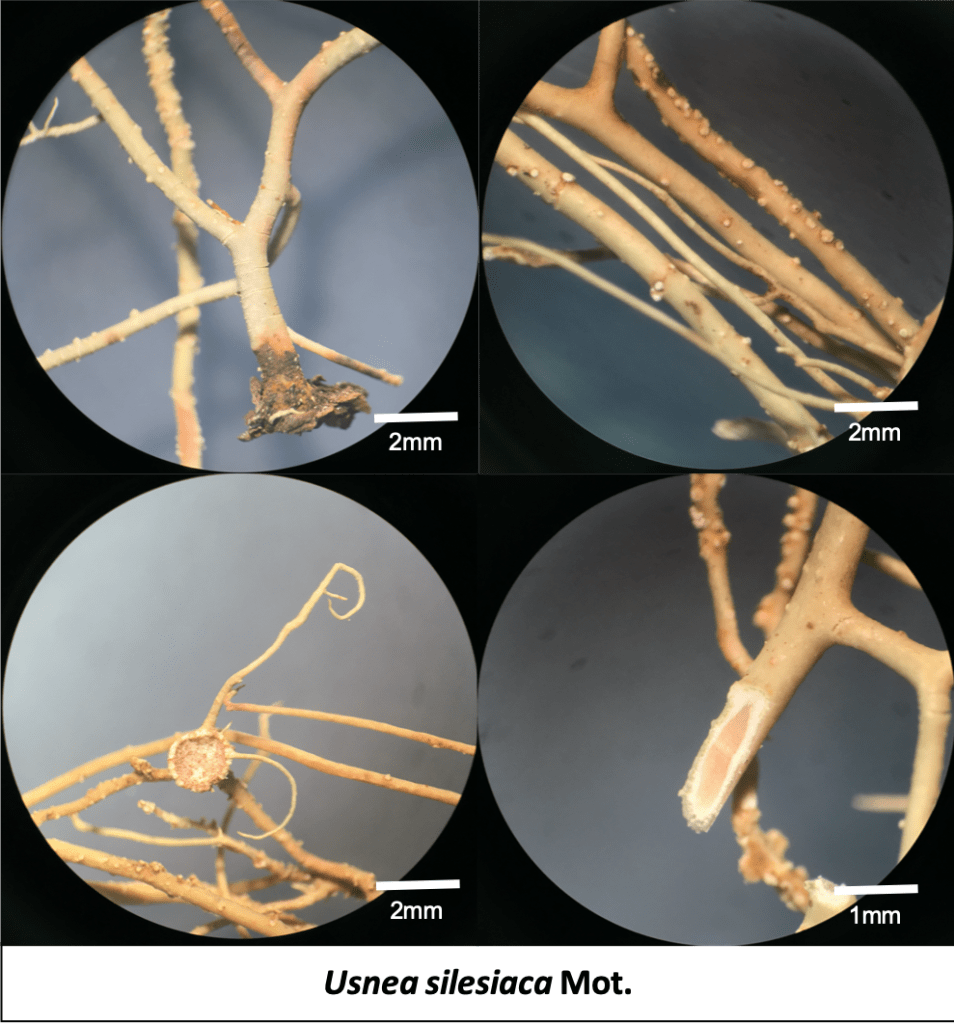
Usnea silesiaca is a distinctive shrubby to subpendent lichen that thrives in the moisture-rich, montane environments of Bukit Larut. This species is primarily identified by its robust, yellowish-green thallus and a branching pattern that is often slightly irregular and stiff. A key diagnostic feature is its surface, which is typically covered in numerous small, rounded soralia that produce a fine, powdery substance for reproduction; these spots are often slightly raised and can be found scattered across the main and secondary branches. Unlike some of its more “hairy” relatives, Usnea silesiaca lacks dense fibrils, giving it a cleaner but more “spotted” appearance. Internally, it features a strong, white central cord and a medulla that characteristically reacts K+ yellow turning red, indicating a high concentration of salazinic acid. Its presence is a testament to the high air quality and consistent fog drip that characterizes the “cloud forest” zones of Maxwell Hill.
 Lichens of Peninsular Malaysia
Leave a comment